.png)
Beyond the Blueprint: Why your Child's Environment Matters as Much as Their DNA
Updated: Jan 26
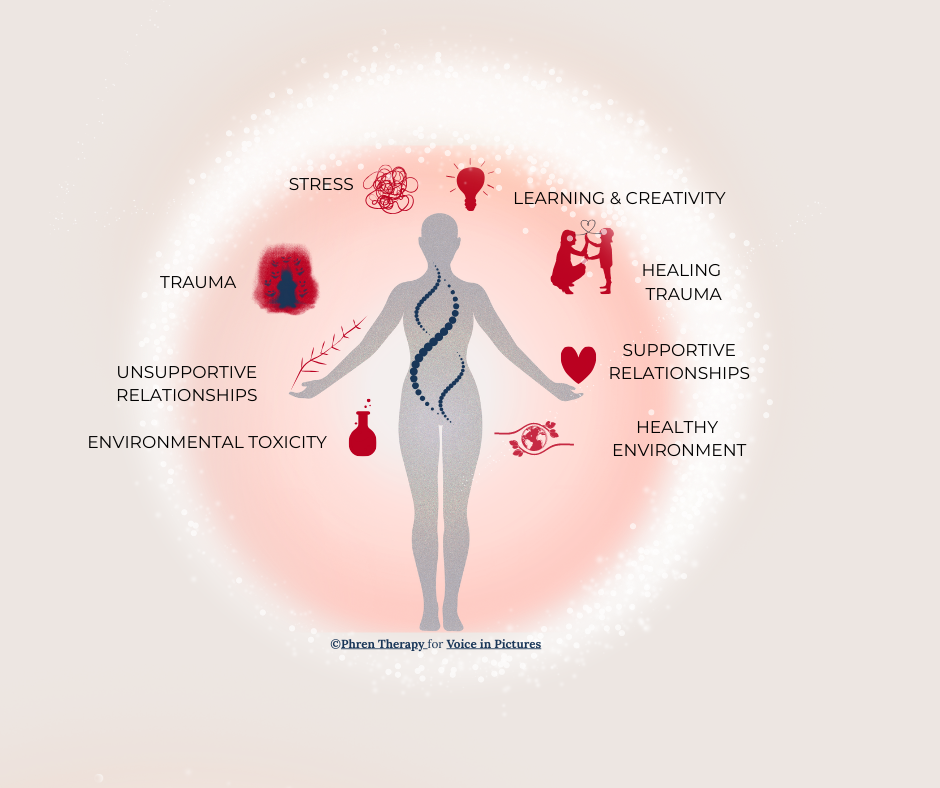
The long-standing debate of "Nature vs. Nurture" has finally been settled: the answer is both. Emerging research in 𝐞𝐩𝐢𝐠𝐞𝐧𝐞𝐭𝐢𝐜𝐬 shows that while our DNA provides the basic script for our lives, our experiences act as the director, determining how that script is actually performed.
𝐖𝐡𝐚𝐭 𝐢𝐬 𝐄𝐩𝐢𝐠𝐞𝐧𝐞𝐭𝐢𝐜𝐬?
Epigenetics is the study of how environmental influences - especially a child's early experiences - can actually affect the expression of their genes. While our 𝐞𝐩𝐢𝐠𝐞𝐧𝐨𝐦𝐞 can change throughout our lives, young brains are particularly sensitive to these modifications. During the earliest years, when the brain is developing most rapidly, environmental adaptations influence the foundation for future health, resilience, and skills.
Think of it this way:
𝐃𝐍𝐀 (𝐓𝐡𝐞 𝐒𝐜𝐫𝐢𝐩𝐭): You inherit a fixed set of genes from your biological parents that provide instructions for things like height or temperament;
𝐓𝐡𝐞 𝐄𝐩𝐢𝐠𝐞𝐧𝐨𝐦𝐞 (𝐓𝐡𝐞 𝐒𝐰𝐢𝐭𝐜𝐡𝐞𝐬): During development, your DNA accumulates chemical marks that determine how much or how little of a gene is expressed. These marks act like switches, turning genes on or off.
This explains why even genetically identical twins can exhibit different behaviours, skills, and health outcomes based on their unique life experiences.
𝐓𝐡𝐞 𝐏𝐨𝐰𝐞𝐫 𝐨𝐟 𝐄𝐱𝐩𝐞𝐫𝐢𝐞𝐧𝐜𝐞
Our 𝐞𝐩𝐢𝐠𝐞𝐧𝐨𝐦𝐞 is highly dynamic and can be reshaped by the world around us. These influences leave a unique epigenetic signature on our genes:
Supportive relationships and rich learning opportunities create positive signatures that activate a child’s full genetic potential (𝐩𝐨𝐬𝐢𝐭𝐢𝐯𝐞 𝐢𝐧𝐟𝐥𝐮𝐞𝐧𝐜𝐞𝐬 );
Stressful life circumstances or environmental toxins can rearrange these chemical marks in ways that negatively impact health (𝐧𝐞𝐠𝐚𝐭𝐢𝐯𝐞 𝐢𝐧𝐟𝐥𝐮𝐞𝐧𝐜𝐞𝐬).
One of the most profound discoveries in this field is that these epigenetic signatures are not always permanent. Recent research suggests that negative changes can be 𝐫𝐞𝐯𝐞𝐫𝐬𝐞𝐝, and healthy functioning can be restored.
The best strategy for building strong brains is to:
Support 𝐫𝐞𝐬𝐩𝐨𝐧𝐬𝐢𝐯𝐞 𝐫𝐞𝐥𝐚𝐭𝐢𝐨𝐧𝐬𝐡𝐢𝐩𝐬 between children and their caregivers;
𝐑𝐞𝐝𝐮𝐜𝐞 sources of chronic 𝐬𝐭𝐫𝐞𝐬𝐬;
Provide high-quality 𝐜𝐚𝐫𝐞 for 𝐩𝐫𝐞𝐠𝐧𝐚𝐧𝐭 𝐰𝐨𝐦𝐞𝐧 and 𝐲𝐨𝐮𝐧𝐠 𝐟𝐚𝐦𝐢𝐥𝐢𝐞𝐬.
By focusing on these areas, we can literally change the chemistry around a child's genes, allowing them to thrive regardless of the "script" they were born with.


